Reise Djursland 2005: Unterschied zwischen den Versionen
→Programm: Wetter-Link |
Sh01 (Diskussion | Beiträge) |
||
| Zeile 164: | Zeile 164: | ||
== Gliederung == |
== Gliederung == |
||
# introduction: Original motivation and project history |
|||
# Einführung: Idee und Motivation, Historie / Anfänge |
|||
# technology |
|||
# Technik: |
|||
## officially supported Access Points - Linksys WRT54g and Asus WL-500g |
|||
## Rahmen - IP, WLAN nach IEEE802.11, Linksys/Asus Broadcom APs, OLSR |
|||
## IEEE80.211 compliant WIFI (ad-hoc mode), IPv4, OLSR |
|||
## Knotentypen (OLSR) |
|||
## node types |
|||
### Stationäre Knoten (Access Points) |
|||
### stationary nodes |
|||
#### Dachausbau Mitglieder - optimal |
|||
#### antennas placed on the roof |
|||
#### Wohnungsintern Mitglieder - ungünstiger |
|||
#### APs placed inside flats or offices |
|||
#### Vereinsbetrieben - zur Stärkung Infrastruktur/Grundversorgung |
|||
#### to maintain an effective infrastructure, the association owns and administers APs at some important locations |
|||
### Mobile Knoten |
|||
### mobile nodes |
|||
#### Notebooks mit verschiedenen Betriebssystemem |
|||
#### basically just notebooks with wifi-cards that run OLSR |
|||
#### nur zur vorübergehenden Nutzung außer Haus |
|||
#### usable anywhere in the area serviced by ON |
|||
#### Voraussetzung ist Betrieb eines stationären Knotens |
|||
## history of infrastructure development |
|||
## Entwicklungssutfen (stationäre) Netzknoten |
|||
### temporary installations for test purposes |
|||
### Nicht feste Testinstallation |
|||
### point-to-point connections using highly directional antennas |
|||
### Erstes kleines Netz mit Richtfunkstrecken Punkt-zu-Punkt |
|||
### growth; mixed use of directional antennas and omnidirectional antennas placed inside of buildings |
|||
### Wachstum, Mischform APs mit Richtfunk und APs mit Inhouse-Rundstrahler |
|||
### tendency of members to attempt to establish direct wifi-links to APs linked by LAN to an internet-gateway, stagnation |
|||
### Stagnation, alle Teilnehmer versuchen GW-APs direkt zu erreichen |
|||
### growth and increase of redundant routes through increase in AP density and use of less directional antennas |
|||
### Wachstum durch engmaschigeres Netz und mehr alternative Wege |
|||
## history of transmission protocols |
|||
## Enwicklungsstufen Übertragungsprotokolle |
|||
### WDS; bridging; ethernet Spanning Tree Protocol to deactivate redundant routes |
|||
### Reines Bridging und WDS |
|||
### |
### ad-hoc mode; IPv4 routing; OLSR |
||
## address spaces |
|||
## Adressierungsschema |
|||
## |
## gateway "titan" |
||
### |
### SNAT Opennet -> Internet |
||
### OpenVPN |
### OpenVPN 2.0; authentication through certificates signed by our CA |
||
### DNAT (i.e. port forwarding) to openvpn Addresses; currently 10 ports per user |
|||
### Port-Forwarding via OpenVPN mgl. |
|||
### |
### DSL; theoretical bandwith 3000/384 (kbit/s)? |
||
### logging of individual connections |
|||
### Diverse Auswertungen, Logging |
|||
#### |
#### Ocellata - Connection Quality; measured by using ICMP ECHO Requests |
||
##### [http://titan.www.opennet-initiative.de/stats/connection_quality/ocellata.xhtml] |
|||
#### Crinoidea - TopN Traffic IPs |
|||
#### Crinoidea (MySQLdb) - topN IP Addresses according to ON-Internet traffic caused |
|||
#### Alfredi - Opennet Map (with LQ) |
|||
##### [http://titan.www.opennet-initiative.de/accounting/topN/opennet_top10_last.html] |
|||
#### olsrd/pydot - Topology Dot Graphs |
|||
#### Alfredi (PIM) - Maps with colored nodes and connections |
|||
#### netfilter/pyrddtool - Traffic Graphs |
|||
##### [http://titan.www.opennet-initiative.de/topology/olsr/alfredi_output.png] |
|||
## Anschluss Clients |
|||
##### [http://titan.www.opennet-initiative.de/topology/olsr/alfredi_output_6.jpg] |
|||
### Ethernet am Access Point |
|||
#### Ketupo (olsrd, olsrd_dd_ti, dot, Pydot) - Topology Dot Graphs |
|||
### zweiter Access Point für private drahlose Nutzung |
|||
##### [http://titan.www.opennet-initiative.de/topology/olsr/on_olsr_topology_all.png] |
|||
### OpenVPN für Internet-Zugang (auf jeden Client oder auf AP) |
|||
#### Teucrium (netfilter, rrdtool, pyrddtool) - Traffic Graphs |
|||
##### [http://titan.www.opennet-initiative.de/stats/graphics/titan_traffic_001__1d_ppp+.png] |
|||
##### [http://titan.www.opennet-initiative.de/stats/graphics/titan_traffic_001__30d_ppp+.png] |
|||
## interfaces for users |
|||
### ethernet on their own AP |
|||
#### possibility of using a second AP for private wireless use |
|||
### OpenVPN for internet-routing (endpoints on user-APs or client-systems) |
|||
## Acccess Point Firmware |
## Acccess Point Firmware |
||
### started out using Sveasoft's Alchemy on Linksys, default FW on Asus APs |
|||
### begonnen mit Alchemy (WDS) |
|||
### current versions based on OpenWRT |
|||
### heute mit OpenWRT-basierter Firmware |
|||
#### |
#### legacy ON FW: based on Freifunk-Firmware 1.0.2, minor modifications |
||
#### "Opennet Firmware" |
#### "Opennet Firmware" based on OpenWRT whiterussian (currently rc2) (several modifications, including the FFF-webinterface) |
||
##### web-based installation and configuration possible |
|||
### Opennet Firmware - Aktuelle Ergebnisse |
|||
##### OpenVPN use on the AP explicitly supported; automated certificate creation |
|||
#### webbasierte Installation und Konfiguration |
|||
##### individual extensions still possible, of course |
|||
#### OpenVPN auf dem AP incl. Zertifikatserstellung |
|||
# social issues |
|||
#### Offenheit für persönliche Erweiterungen (OpenWRT) |
|||
## general structure |
|||
#### Port-Forwarding per Webfrontend |
|||
### loosely organized, no pervasive hierarchial structure |
|||
# Soziales: |
|||
### high importance of technologically skilled members |
|||
## Mitwirkende/Zusammensetzung |
|||
## day-to-day operation |
|||
### Lose Gruppe, keine bis wenig Hirachie |
|||
### workshoops and meetings - also effective ways for interested persons to get involved |
|||
### erster Vorstand/Aktive aus sehr verschiedenen Schichten |
|||
### documentation (e.g. HOWTOs) is collaboratively maintained on the ON wiki |
|||
### viele Technisch-versierte Mitstreiter notwendig |
|||
### communication mostly per Forum, IRC and e-mail |
|||
## Arbeitsweise |
|||
### increasing interest in public relations issues |
|||
### Workshops und Vereinstreffen als effektiver Einstiegspunkt |
|||
## motivation for individual members |
|||
### Howtos per Wiki erstellt und gepflegt |
|||
### cheap internet access |
|||
### Kommunikation vorwiegend per Forum und IRC |
|||
### relatively fast internet access compared to the alternatives in areas without DSL coverage |
|||
### Viel Öffenlichkeitsarbeit notwendig - innerhalb Verein wie Außen |
|||
### interest in technology / the community / ideological issues |
|||
## Motivation der Netzteilnehmer |
|||
### mobile internet access in the covered area |
|||
### (Sehr) preiswerter Internetzugang |
|||
# organisation |
|||
### schnellerer Netzzugang in unterversorgten Gebieten |
|||
## some explicit internal rules |
|||
### Technik-Interesse / spannende Community-Idee / "Pionierarbeit" |
|||
## responsibility for most of the infrastructure lies with AP-owners (i.e. individual members) |
|||
### Mobile Nutzung im Stadtgebiet |
|||
## individual competent members responsible for |
|||
# Organisatorisches: |
|||
### firmware design |
|||
## Vereinsgründung |
|||
### gateway administration |
|||
## Satzung, Finanzordnung, Leistungsordnung |
|||
### management of jointly owned APs |
|||
## Rollen |
|||
### Public Relations |
|||
### Vorstand für Finanzen, Rechtliches, Wegweisung und Mitgliederverwaltung |
|||
### support of new members |
|||
### AP-Betreiber eigenverantwortlich |
|||
# future relevance |
|||
### Betreuer/Entwickler für Firmware und Gateway |
|||
## connecting villages without broadband-coverage? |
|||
### Betreuer von vereinseigenen APs/Standorten |
|||
## supported by people interested in technological and social issues in areas covered by broadband |
|||
### Verantwortliche für Offentlichkeit und neue Mitglieder |
|||
## mobile use |
|||
# Zukunft: |
|||
# guesstimated use of communication methods |
|||
## Dörfer, die auch bald noch kein Breitband-Anschluss haben? |
|||
## In DSL-versorgten Gebieten WLAN-Technik-Fans? |
|||
## Mobile Nutzung |
|||
# Bereitgestellte digitale Kommunikationsmittel (mit geschätzter Nutzung) |
|||
## 45% - Forum (Wortlab Burning Board) |
## 45% - Forum (Wortlab Burning Board) |
||
## 30% - Wiki (Mediawiki) |
## 30% - Wiki (Mediawiki) |
||
## 15% - Opennet IRC, |
## 15% - Opennet IRC, increasing relevance |
||
## 6% - Opennet |
## 6% - Opennet mailing list (Mailman) |
||
## 3% - Opennet Mail (apXX@..) |
## 3% - Opennet Mail (apXX@..) |
||
## 1% - Gallery |
## 1% - Gallery |
||
== Wichtige Bilder == |
== Wichtige Bilder == |
||
Version vom 18. August 2005, 16:43 Uhr
Programm
Diskussion im Forum: http://forum.opennet-initiative.de/thread.php?threadid=332
Wetter: http://www.wetteronline.de/Daenemark/Arhus.htm
Freitag
Abreise: 14 Uhr CSR Center, im Bus (Bestellung noch offen)
Late arrival
Treffen in Friland, an der Adresse: Econ Pavillonen, Friland 12, Feldballe, 8410 Ronde.
Samstag
- Breakfeast at Fuglsoecentret
- Visit to the Europeia Science Center
- Short presentation of DjurslandsNet and the new Djursland Networking Project
- Drive to the headquarter at the eco-sustainable village Friland
- Lunch / picnic
- Guided trip through the world of DjurslandsNet
- Presentation of new EU project for 15 new Community Networks in the Balticum
- BBQ dinner at Friland and social event
Sonntag
- Breakfeast at Fuglsoecentret
- Short presentation of Rostock OpenNet
- Discussion and ideas session for further cooperation
- Ad-hoc
- Lunch
- Departure
Reisedetails
Anreise
Fahrtdauer mit dem Auto: 5 - 6 Stunden
Unterbringung
Variante 1: Camping
Friland Feldhalle, Camping, free of cost, food costs 15 - 20 (Währung erfrage ich noch)
Variante 2: Fuglsoecentret
Kosten: 50 - 60 pro Person (Währung erfrage ich noch).
Organizer
Lokaler Organizer ist Gregers Petersen, den manche bereits von seinem Vortrag in Rostock kennen.
Seine Handy Nummer: +45 3024 8064
Buchungen
Clemens Cap
- Identität
- Clemens Cap, Blücherstraße 71, 18055 Rostock
- Kommunikation
- 0381 498 7500 (Uni), 0381 499 54 85 (home), Handy (bitte nur im Notfall und während der Reise...) 0171 270 31 32, cap AT informatik DOT uni-rostock DOT de
- Anreise
- Mit dem eigenen Auto, nimmt noch Robert Nickel mit, hat noch zwei weitere sehr unbequeme Plätze im Kofferraum frei ;-)
- Unterbringung
- Single Room in the Guest House Fuglsoecentret
Robert Nickel
- Identität
- Robert Nickel
- Kommunikation
- ap11 AT opennet-initiative DOT de, mobil: 017670037598
- Anreise
- Unterbringung
- Zelt
Ralph Oesker
- Identität
- Ralph Oesker, http://wiki.opennet-initiative.de/index.php/Benutzer:Mdbw
- Kommunikation
- Mail: opennet (at-zeichen) dynaperl.de, Mobil null eins sieben fünf - fünf acht sechs sechs sieben zwei zwei
- Anreise
- Eigenes Auto, Freitag vormittag ab Rostock bietet noch 2-3 Plätze an
- Unterbringung
- Zelt oder Auto
Sebastian Hagen
- Identität
- Sebastian Hagen, sh01; 18106 Rostock, Carl-von-Linne 12
- Kommunikation
- 73656261737469616e5f686167656e406d656d6573706163652e6e6574
- Anreise
- Nutzung einer MFG von Ralph Oesker
- Unterbringung
- Zelt oder PKW (Ralph?)
Mathias Mahnke
Einige Infos fehlen noch
- Identität
- Mathias Mahnke, Am Kabutzenhof 17, 18057 Rostock, http://www.ger783.de/MathiasMahnke
- Kommunikation
- 0381/2005569 (mit AB), 0172/3837053, mathias -AT- mycr -DOT- DE
- Anreise
- Benötige MFG.
- Unterbringung
- Zelt wäre ausreichend. Zelt vorhanden. Mitschläfer willkommen.
Rene Ejury
- Identität
- Rene Ejury, Waldemarstr. 47, 18057 Rostock
- Kommunikation
- 0381/1286099, 0173/4726830 (nur sms), opennet -AT absorb -DOT- it
- Anreise
- brauche MFG
- Unterbringung
- Zelt reicht...
Friedrich Hartmann
- Identität
- Friedrich Hartmann, Borwinstr. 38, 18057 Rostock
- Kommunikation
- 0176/23542708 mail
 friedrich-hartmann.de
 - Anreise
- Bei Ralph? Sixt? t.b.c.
- Unterbringung
- Kein eigenes Zelt in Rostock verfügbar

Template Copy Paste
- Identität
- Kommunikation
- Anreise
- Unterbringung
Übersicht
| Wer | Anreise | Übernachtung |
|---|---|---|
| Clemens | Auto (eigenes) | Fuglsoecentret Single room |
| Robert | Auto (mit Clemens) | Zelt |
| Ralph | Auto (eigenes) | Zelt |
| Sebastian | Auto (mit Ralph) | ?? |
| Mathias | Auto (mit Ralph) | Zelt |
| Rene | Auto (mit Ralph) | ?? |
Vortragsentwurf
Hier ein allererster Versuch die Inhalte unseres Vortrages zu strukturieren. Mir liegt vor allem daran, die kritischen Punkte unseres Wachstums zu beleuchten. Ich (Mathias) werde keine weiteren Änderungen mehr vornehmen.
Gliederung
- introduction: Original motivation and project history
- technology
- officially supported Access Points - Linksys WRT54g and Asus WL-500g
- IEEE80.211 compliant WIFI (ad-hoc mode), IPv4, OLSR
- node types
- stationary nodes
- antennas placed on the roof
- APs placed inside flats or offices
- to maintain an effective infrastructure, the association owns and administers APs at some important locations
- mobile nodes
- basically just notebooks with wifi-cards that run OLSR
- usable anywhere in the area serviced by ON
- stationary nodes
- history of infrastructure development
- temporary installations for test purposes
- point-to-point connections using highly directional antennas
- growth; mixed use of directional antennas and omnidirectional antennas placed inside of buildings
- tendency of members to attempt to establish direct wifi-links to APs linked by LAN to an internet-gateway, stagnation
- growth and increase of redundant routes through increase in AP density and use of less directional antennas
- history of transmission protocols
- WDS; bridging; ethernet Spanning Tree Protocol to deactivate redundant routes
- ad-hoc mode; IPv4 routing; OLSR
- address spaces
- gateway "titan"
- SNAT Opennet -> Internet
- OpenVPN 2.0; authentication through certificates signed by our CA
- DNAT (i.e. port forwarding) to openvpn Addresses; currently 10 ports per user
- DSL; theoretical bandwith 3000/384 (kbit/s)?
- logging of individual connections
- Ocellata - Connection Quality; measured by using ICMP ECHO Requests
- Crinoidea (MySQLdb) - topN IP Addresses according to ON-Internet traffic caused
- Alfredi (PIM) - Maps with colored nodes and connections
- Ketupo (olsrd, olsrd_dd_ti, dot, Pydot) - Topology Dot Graphs
- Teucrium (netfilter, rrdtool, pyrddtool) - Traffic Graphs
- interfaces for users
- ethernet on their own AP
- possibility of using a second AP for private wireless use
- OpenVPN for internet-routing (endpoints on user-APs or client-systems)
- ethernet on their own AP
- Acccess Point Firmware
- started out using Sveasoft's Alchemy on Linksys, default FW on Asus APs
- current versions based on OpenWRT
- legacy ON FW: based on Freifunk-Firmware 1.0.2, minor modifications
- "Opennet Firmware" based on OpenWRT whiterussian (currently rc2) (several modifications, including the FFF-webinterface)
- web-based installation and configuration possible
- OpenVPN use on the AP explicitly supported; automated certificate creation
- individual extensions still possible, of course
- social issues
- general structure
- loosely organized, no pervasive hierarchial structure
- high importance of technologically skilled members
- day-to-day operation
- workshoops and meetings - also effective ways for interested persons to get involved
- documentation (e.g. HOWTOs) is collaboratively maintained on the ON wiki
- communication mostly per Forum, IRC and e-mail
- increasing interest in public relations issues
- motivation for individual members
- cheap internet access
- relatively fast internet access compared to the alternatives in areas without DSL coverage
- interest in technology / the community / ideological issues
- mobile internet access in the covered area
- general structure
- organisation
- some explicit internal rules
- responsibility for most of the infrastructure lies with AP-owners (i.e. individual members)
- individual competent members responsible for
- firmware design
- gateway administration
- management of jointly owned APs
- Public Relations
- support of new members
- future relevance
- connecting villages without broadband-coverage?
- supported by people interested in technological and social issues in areas covered by broadband
- mobile use
- guesstimated use of communication methods
- 45% - Forum (Wortlab Burning Board)
- 30% - Wiki (Mediawiki)
- 15% - Opennet IRC, increasing relevance
- 6% - Opennet mailing list (Mailman)
- 3% - Opennet Mail (apXX@..)
- 1% - Gallery
Wichtige Bilder
-
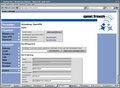 Opennet Firmware, OpenVPN-Dialog
 -
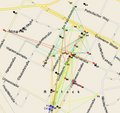 Opennet Karte (Alfredi), Ausschnitt KTV
 -
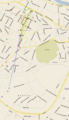 Opennet Karte (Alfredi), Gesamt
 -
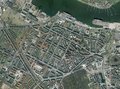 KTV, vllt. kann man noch ein Screenshot von Google Earth machen (Windows-Nutzer vor!)
 -
 Opennet Logo
 -
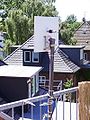 Panel AP43
 -
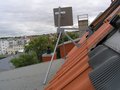 Panel AP38
 -
 Saugnapf-Omni AP24
 -
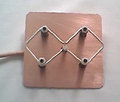 Quad AP11
 -
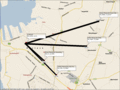 Reichweitentest
 -
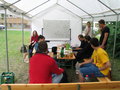 Netzwerk Grundlagen Workshop
 -
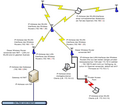 Opennet Adressierung
 -
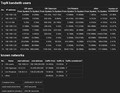 Monatliche Top10-Nutzer (Transfervolumen)
 -
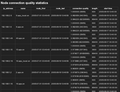 Verbindungsqualität (Octella)
 -
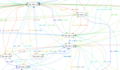 Ausschnitt Drahtlose Topologie (Dot-Graph)
 -
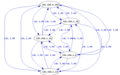 Ausschnitt Drahtgebundene Topologie
 -
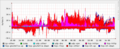 1d Traffic
 -
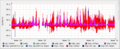 30d Traffic
 -
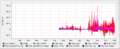 356d Traffic


![[3]](http://titan.www.opennet-initiative.de/topology/olsr/alfredi_output.png)
![[4]](http://titan.www.opennet-initiative.de/topology/olsr/alfredi_output_6.jpg)
![[5]](http://titan.www.opennet-initiative.de/topology/olsr/on_olsr_topology_all.png)
![[6]](http://titan.www.opennet-initiative.de/stats/graphics/titan_traffic_001__1d_ppp+.png)
![[7]](http://titan.www.opennet-initiative.de/stats/graphics/titan_traffic_001__30d_ppp+.png)
Weitere Bilder: