LoRaSensor: Unterschied zwischen den Versionen
Inhalt gelöscht Inhalt hinzugefügt
Thm (Diskussion | Beiträge) |
Thm (Diskussion | Beiträge) Änderung 32442 von Thm (Diskussion) rückgängig gemacht. Source-Code Formatierung funktioniert nicht. |
||
| Zeile 34: | Zeile 34: | ||
* C-Code (Arduino-Style) zum Auslesen des Sensors und Versenden des Ergebnisses per LoRaWAN |
* C-Code (Arduino-Style) zum Auslesen des Sensors und Versenden des Ergebnisses per LoRaWAN |
||
* InfluxDB und Grafana [[Datei:mq135messwerte.png|mini|Verlauf der Sensor-Messwerte vom MQ-135]] |
* InfluxDB und Grafana [[Datei:mq135messwerte.png|mini|Verlauf der Sensor-Messwerte vom MQ-135]] |
||
<syntaxhighlight lang="c"> |
|||
#include <Arduino.h> |
|||
#include <U8g2lib.h> |
|||
//https://github.com/olikraus/u8g2 |
|||
#include "esp_system.h" |
|||
#include <lmic.h> |
|||
#include <hal/hal.h> |
|||
#include <SPI.h> |
|||
#ifdef U8X8_HAVE_HW_I2C |
|||
#include <Wire.h> |
|||
#endif |
|||
// LoRaWAN NwkSKey, network session key |
|||
// This is the default Semtech key, which is used by the prototype TTN |
|||
// network initially. |
|||
static const PROGMEM u1_t NWKSKEY[16] = { 0x2B, 0x7E, 0x15, 0x16, 0x28, 0xAE, 0xD2, 0xA6, 0xAB, 0xF7, 0x15, 0x88, 0x09, 0xCF, 0x4F, 0x3C }; |
|||
// LoRaWAN AppSKey, application session key |
|||
// This is the default Semtech key, which is used by the prototype TTN |
|||
// network initially. |
|||
static const u1_t PROGMEM APPSKEY[16] = { 0x2B, 0x7E, 0x15, 0x16, 0x28, 0xAE, 0xD2, 0xA6, 0xAB, 0xF7, 0x15, 0x88, 0x09, 0xCF, 0x4F, 0x3C }; |
|||
// LoRaWAN end-device address (DevAddr) |
|||
// See http://thethingsnetwork.org/wiki/AddressSpace |
|||
static const u4_t DEVADDR = 0x03FF0001 ; // <-- Change this address for every node! |
|||
int sensorPin = 34; // select the input pin for the potentiometer |
|||
int ledPin = 25; // select the pin for the LED |
|||
int sensorValue = 0; // variable to store the value coming from the sensor |
|||
int counter = 0; |
|||
// These callbacks are only used in over-the-air activation, so they are |
|||
// left empty here (we cannot leave them out completely unless |
|||
// DISABLE_JOIN is set in config.h, otherwise the linker will complain). |
|||
void os_getArtEui (u1_t* buf) { } |
|||
void os_getDevEui (u1_t* buf) { } |
|||
void os_getDevKey (u1_t* buf) { } |
|||
uint8_t mydata[] = "Empty"; |
|||
static osjob_t sendjob; |
|||
// Schedule TX every this many seconds (might become longer due to duty |
|||
// cycle limitations). |
|||
const unsigned TX_INTERVAL = 60; |
|||
// Pin mapping |
|||
const lmic_pinmap lmic_pins = { |
|||
.nss = 6, |
|||
.rxtx = LMIC_UNUSED_PIN, |
|||
.rst = 5, |
|||
.dio = {2, 3, 4}, |
|||
}; |
|||
void onEvent (ev_t ev) { |
|||
Serial.print(os_getTime()); |
|||
Serial.print(": "); |
|||
switch(ev) { |
|||
case EV_SCAN_TIMEOUT: |
|||
Serial.println(F("EV_SCAN_TIMEOUT")); |
|||
break; |
|||
case EV_BEACON_FOUND: |
|||
Serial.println(F("EV_BEACON_FOUND")); |
|||
break; |
|||
case EV_BEACON_MISSED: |
|||
Serial.println(F("EV_BEACON_MISSED")); |
|||
break; |
|||
case EV_BEACON_TRACKED: |
|||
Serial.println(F("EV_BEACON_TRACKED")); |
|||
break; |
|||
case EV_JOINING: |
|||
Serial.println(F("EV_JOINING")); |
|||
break; |
|||
case EV_JOINED: |
|||
Serial.println(F("EV_JOINED")); |
|||
break; |
|||
case EV_RFU1: |
|||
Serial.println(F("EV_RFU1")); |
|||
break; |
|||
case EV_JOIN_FAILED: |
|||
Serial.println(F("EV_JOIN_FAILED")); |
|||
break; |
|||
case EV_REJOIN_FAILED: |
|||
Serial.println(F("EV_REJOIN_FAILED")); |
|||
break; |
|||
break; |
|||
case EV_TXCOMPLETE: |
|||
Serial.println(F("EV_TXCOMPLETE (includes waiting for RX windows)")); |
|||
if(LMIC.dataLen) { |
|||
// data received in rx slot after tx |
|||
Serial.print(F("Data Received: ")); |
|||
Serial.write(LMIC.frame+LMIC.dataBeg, LMIC.dataLen); |
|||
Serial.println(); |
|||
} |
|||
// Schedule next transmission |
|||
os_setTimedCallback(&sendjob, os_getTime()+sec2osticks(TX_INTERVAL), do_send); |
|||
break; |
|||
case EV_LOST_TSYNC: |
|||
Serial.println(F("EV_LOST_TSYNC")); |
|||
break; |
|||
case EV_RESET: |
|||
Serial.println(F("EV_RESET")); |
|||
break; |
|||
case EV_RXCOMPLETE: |
|||
// data received in ping slot |
|||
Serial.println(F("EV_RXCOMPLETE")); |
|||
break; |
|||
case EV_LINK_DEAD: |
|||
Serial.println(F("EV_LINK_DEAD")); |
|||
break; |
|||
case EV_LINK_ALIVE: |
|||
Serial.println(F("EV_LINK_ALIVE")); |
|||
break; |
|||
default: |
|||
Serial.println(F("Unknown event")); |
|||
break; |
|||
} |
|||
} |
|||
void do_send(osjob_t* j){ |
|||
// Check if there is not a current TX/RX job running |
|||
if (LMIC.opmode & OP_TXRXPEND) { |
|||
Serial.println(F("OP_TXRXPEND, not sending")); |
|||
} else { |
|||
// Prepare upstream data transmission at the next possible time. |
|||
LMIC_setTxData2(1, mydata, sizeof(mydata)-1, 0); |
|||
Serial.println(F("Packet queued")); |
|||
} |
|||
// Next TX is scheduled after TX_COMPLETE event. |
|||
} |
|||
/* |
|||
U8glib Example Overview: |
|||
Frame Buffer Examples: clearBuffer/sendBuffer. Fast, but may not work with all Arduino boards because of RAM consumption |
|||
Page Buffer Examples: firstPage/nextPage. Less RAM usage, should work with all Arduino boards. |
|||
U8x8 Text Only Example: No RAM usage, direct communication with display controller. No graphics, 8x8 Text only. |
|||
*/ |
|||
// U8g2 Contructor List (Frame Buffer) |
|||
// The complete list is available here: https://github.com/olikraus/u8g2/wiki/u8g2setupcpp |
|||
U8G2_SSD1306_128X64_NONAME_F_SW_I2C u8g2(U8G2_R0, /* clock=*/ 15, /* data=*/ 4, /* reset=*/ 16); |
|||
void u8g2_prepare(void) { |
|||
u8g2.setFont(u8g2_font_6x10_tf); |
|||
//https://github.com/olikraus/u8g2/wiki/fntgrpx11 |
|||
u8g2.setFontRefHeightExtendedText(); |
|||
u8g2.setDrawColor(1); |
|||
u8g2.setFontPosTop(); |
|||
u8g2.setFontDirection(0); |
|||
} |
|||
#define opennetlogobw_width 64 |
|||
#define opennetlogobw_height 64 |
|||
static unsigned char opennetlogobw_bits[] = { |
|||
0x00, 0x00, 0x80, 0xff, 0x1f, 0x00, 0x00, 0x00, 0x00, 0x00, 0xf8, 0x07, |
|||
0xfc, 0x03, 0x00, 0x00, 0x00, 0x00, 0x0f, 0x00, 0x00, 0x1f, 0x00, 0x00, |
|||
0x00, 0xe0, 0x01, 0x00, 0x00, 0x78, 0x00, 0x00, 0x00, 0x38, 0x00, 0x00, |
|||
0x00, 0xc0, 0x03, 0x00, 0x00, 0x0e, 0x00, 0x00, 0x00, 0x00, 0x07, 0x00, |
|||
0x00, 0x00, 0x00, 0x00, 0x00, 0x00, 0x1c, 0x00, 0x00, 0x00, 0xc0, 0xff, |
|||
0x3f, 0x00, 0x70, 0x00, 0x00, 0x00, 0xf8, 0x00, 0xf0, 0x03, 0xc0, 0x00, |
|||
0x00, 0x00, 0x0f, 0x00, 0x00, 0x0f, 0x80, 0x01, 0x00, 0xc0, 0x01, 0x00, |
|||
0x00, 0x38, 0x00, 0x03, 0x00, 0x40, 0x00, 0x00, 0x00, 0xe0, 0x00, 0x06, |
|||
0x00, 0x00, 0x00, 0x00, 0x00, 0x80, 0x03, 0x1c, 0x00, 0x00, 0x00, 0xfc, |
|||
0x03, 0x00, 0x06, 0x38, 0x00, 0x00, 0xc0, 0xff, 0x7f, 0x00, 0x1c, 0x30, |
|||
0x00, 0x00, 0x78, 0x00, 0xe0, 0x01, 0x38, 0x60, 0x00, 0x00, 0x0e, 0x00, |
|||
0x00, 0x07, 0x60, 0xc0, 0x00, 0x00, 0x00, 0x00, 0x00, 0x1c, 0xc0, 0x00, |
|||
0x00, 0x00, 0x00, 0x00, 0x00, 0x30, 0x80, 0x00, 0x00, 0x00, 0x00, 0x00, |
|||
0x00, 0xe0, 0x80, 0x01, 0x00, 0x00, 0x00, 0xfe, 0x07, 0x80, 0x01, 0x01, |
|||
0x00, 0x00, 0xc0, 0x07, 0x3c, 0x00, 0x03, 0x00, 0x00, 0x00, 0x60, 0x00, |
|||
0xe0, 0x00, 0x02, 0x00, 0x00, 0x00, 0x00, 0x00, 0x80, 0x01, 0x06, 0x00, |
|||
0x00, 0x00, 0x00, 0x00, 0x00, 0x07, 0x00, 0x00, 0x00, 0x00, 0x00, 0x00, |
|||
0x00, 0x0c, 0x00, 0x00, 0x00, 0x00, 0x00, 0xe0, 0x00, 0x18, 0x00, 0x00, |
|||
0x00, 0x00, 0x00, 0xfe, 0x07, 0x08, 0x00, 0x00, 0x00, 0x00, 0x00, 0x06, |
|||
0x1c, 0x00, 0x00, 0x00, 0x00, 0x00, 0x00, 0x00, 0x38, 0x00, 0x00, 0x00, |
|||
0x00, 0x00, 0x00, 0x00, 0x60, 0x00, 0x00, 0x00, 0x00, 0x00, 0x00, 0x00, |
|||
0x00, 0x00, 0x00, 0x00, 0x00, 0x00, 0x78, 0x00, 0x00, 0x00, 0x00, 0x00, |
|||
0x00, 0x00, 0xfe, 0x01, 0x80, 0x1f, 0x00, 0x00, 0x00, 0x00, 0xff, 0x03, |
|||
0xc0, 0x3f, 0x00, 0x00, 0x00, 0x00, 0xff, 0x07, 0xe0, 0x7f, 0x00, 0x00, |
|||
0x00, 0x00, 0xff, 0x07, 0xe0, 0x7f, 0x00, 0x00, 0x00, 0x02, 0xff, 0x07, |
|||
0xe0, 0xff, 0x00, 0x00, 0x00, 0x04, 0xfe, 0x03, 0xe0, 0x7f, 0x00, 0x00, |
|||
0x00, 0x0c, 0xfc, 0x03, 0xe0, 0x7f, 0x00, 0x00, 0x00, 0x38, 0xf0, 0x00, |
|||
0xc0, 0x3f, 0x80, 0x00, 0x00, 0x78, 0x00, 0x00, 0x00, 0x06, 0xc0, 0x00, |
|||
0x00, 0xf0, 0x01, 0x00, 0x01, 0x00, 0x60, 0x00, 0x00, 0xf0, 0x07, 0x10, |
|||
0x1e, 0x00, 0x78, 0x00, 0x00, 0xe0, 0x3f, 0x0f, 0xf8, 0x07, 0x7e, 0x00, |
|||
0x00, 0xe0, 0xff, 0x07, 0xf0, 0xff, 0x7f, 0x00, 0x00, 0xe0, 0xff, 0x07, |
|||
0xc0, 0xff, 0x7f, 0x00, 0x00, 0xe0, 0xff, 0x03, 0x80, 0xff, 0x3f, 0x00, |
|||
0x00, 0xe0, 0xff, 0x01, 0x00, 0xff, 0x3f, 0x00, 0x00, 0xf0, 0xff, 0x01, |
|||
0x00, 0xfe, 0x3f, 0x00, 0x00, 0xf8, 0xff, 0x00, 0x00, 0xfe, 0x3f, 0x00, |
|||
0x00, 0xfe, 0xff, 0x00, 0x00, 0xfc, 0x7f, 0x00, 0x80, 0xff, 0xff, 0x00, |
|||
0x00, 0xfc, 0x7f, 0x00, 0xe0, 0x03, 0xff, 0x00, 0x00, 0xfe, 0xff, 0x00, |
|||
0x04, 0x00, 0xf8, 0x00, 0x00, 0xfe, 0xff, 0x00, 0x00, 0x00, 0xf0, 0x00, |
|||
0x00, 0xff, 0xff, 0x01, 0x00, 0x00, 0xe0, 0x00, 0x00, 0x3f, 0xe0, 0x01, |
|||
0x00, 0x00, 0xc0, 0x00, 0x80, 0x0f, 0x80, 0x03, 0x00, 0x00, 0x80, 0x00, |
|||
0xc0, 0x03, 0x00, 0x06, 0x00, 0x00, 0x80, 0x00, 0xe0, 0x00, 0x00, 0x08, |
|||
0x00, 0x00, 0x00, 0x01, 0x30, 0x00, 0x00, 0x10, 0x00, 0x00, 0x00, 0x00, |
|||
0x08, 0x00, 0x00, 0x00, 0x00, 0x00, 0x00, 0x00, 0x04, 0x00, 0x00, 0x00, |
|||
0x00, 0x00, 0x00, 0x00, 0x00, 0x00, 0x00, 0x00 }; |
|||
void u8g2_bitmap_modes(uint8_t transparent) { |
|||
const uint8_t frame_size = 24; |
|||
u8g2.setDrawColor(1);// Black |
|||
u8g2.drawXBMP(0, 0, opennetlogobw_width, opennetlogobw_height, opennetlogobw_bits); |
|||
} |
|||
void draw(void) { |
|||
u8g2_prepare(); |
|||
u8g2_bitmap_modes(0); |
|||
} |
|||
void setup(void) { |
|||
u8g2.begin(); |
|||
pinMode(ledPin, OUTPUT); |
|||
pinMode(sensorPin, INPUT); |
|||
Serial.begin(115200); |
|||
Serial.println("Programm gestartet!"); |
|||
#ifdef VCC_ENABLE |
|||
// For Pinoccio Scout boards |
|||
pinMode(VCC_ENABLE, OUTPUT); |
|||
digitalWrite(VCC_ENABLE, HIGH); |
|||
delay(1000); |
|||
#endif |
|||
// LMIC init |
|||
os_init(); |
|||
// Reset the MAC state. Session and pending data transfers will be discarded. |
|||
LMIC_reset(); |
|||
// Set static session parameters. Instead of dynamically establishing a session |
|||
// by joining the network, precomputed session parameters are be provided. |
|||
#ifdef PROGMEM |
|||
// On AVR, these values are stored in flash and only copied to RAM |
|||
// once. Copy them to a temporary buffer here, LMIC_setSession will |
|||
// copy them into a buffer of its own again. |
|||
uint8_t appskey[sizeof(APPSKEY)]; |
|||
uint8_t nwkskey[sizeof(NWKSKEY)]; |
|||
memcpy_P(appskey, APPSKEY, sizeof(APPSKEY)); |
|||
memcpy_P(nwkskey, NWKSKEY, sizeof(NWKSKEY)); |
|||
LMIC_setSession (0x1, DEVADDR, nwkskey, appskey); |
|||
#else |
|||
// If not running an AVR with PROGMEM, just use the arrays directly |
|||
LMIC_setSession (0x1, DEVADDR, NWKSKEY, APPSKEY); |
|||
#endif |
|||
// Set up the channels used by the Things Network, which corresponds |
|||
// to the defaults of most gateways. Without this, only three base |
|||
// channels from the LoRaWAN specification are used, which certainly |
|||
// works, so it is good for debugging, but can overload those |
|||
// frequencies, so be sure to configure the full frequency range of |
|||
// your network here (unless your network autoconfigures them). |
|||
// Setting up channels should happen after LMIC_setSession, as that |
|||
// configures the minimal channel set. |
|||
LMIC_setupChannel(0, 868100000, DR_RANGE_MAP(DR_SF12, DR_SF7), BAND_CENTI); // g-band |
|||
LMIC_setupChannel(1, 868300000, DR_RANGE_MAP(DR_SF12, DR_SF7B), BAND_CENTI); // g-band |
|||
LMIC_setupChannel(2, 868500000, DR_RANGE_MAP(DR_SF12, DR_SF7), BAND_CENTI); // g-band |
|||
LMIC_setupChannel(3, 867100000, DR_RANGE_MAP(DR_SF12, DR_SF7), BAND_CENTI); // g-band |
|||
LMIC_setupChannel(4, 867300000, DR_RANGE_MAP(DR_SF12, DR_SF7), BAND_CENTI); // g-band |
|||
LMIC_setupChannel(5, 867500000, DR_RANGE_MAP(DR_SF12, DR_SF7), BAND_CENTI); // g-band |
|||
LMIC_setupChannel(6, 867700000, DR_RANGE_MAP(DR_SF12, DR_SF7), BAND_CENTI); // g-band |
|||
LMIC_setupChannel(7, 867900000, DR_RANGE_MAP(DR_SF12, DR_SF7), BAND_CENTI); // g-band |
|||
LMIC_setupChannel(8, 868800000, DR_RANGE_MAP(DR_FSK, DR_FSK), BAND_MILLI); // g2-band |
|||
// TTN defines an additional channel at 869.525Mhz using SF9 for class B |
|||
// devices' ping slots. LMIC does not have an easy way to define set this |
|||
// frequency and support for class B is spotty and untested, so this |
|||
// frequency is not configured here. |
|||
// Disable link check validation |
|||
LMIC_setLinkCheckMode(0); |
|||
// Set data rate and transmit power (note: txpow seems to be ignored by the library) |
|||
LMIC_setDrTxpow(DR_SF7,14); |
|||
// Start job |
|||
do_send(&sendjob); |
|||
} |
|||
void loop(void) { |
|||
digitalWrite(ledPin, LOW); |
|||
u8g2.clearBuffer(); |
|||
draw(); |
|||
sensorValue = analogRead(sensorPin); |
|||
u8g2.setFont(u8g2_font_6x10_tf); |
|||
char c[64]; |
|||
String str; |
|||
str = String(sensorValue); |
|||
Serial.println(str); |
|||
str.getBytes(mydata, 64); |
|||
// mydata will be sent in do_send() which is also called in case we receive a EV_TXCOMPLETE event |
|||
str.toCharArray(c, 64); |
|||
u8g2.drawStr(75,0, "Sensor"); |
|||
u8g2.drawStr(75,10, "readout:"); |
|||
u8g2.drawStr(75,20, c); |
|||
u8g2.drawStr(75,34, "LoRaWAN"); |
|||
u8g2.drawStr(75,44, "message"); |
|||
str = String(counter); |
|||
Serial.println(str); |
|||
str.toCharArray(c, 64); |
|||
u8g2.drawStr(75,54, c); |
|||
counter++; |
|||
u8g2.sendBuffer(); |
|||
delay(2500); |
|||
digitalWrite(ledPin, HIGH); |
|||
delay(2500); |
|||
} |
|||
</syntaxhighlight> |
|||
Version vom 2. April 2018, 20:30 Uhr
Anleitung für einen schnell zusammengebauten Sensor-Knoten mit LoRa-Interface
Hardware-Stückliste
- Ein auf der ESP32-Architektur basierendes Developer Board mit LoRa-Funkmodul (Detaillierte Vorstellung bei Heise), am besten mit OLED-Display, in Europa sind die Frequenzen um 433MHz oder 868MHz möglich. Unser erster Gateway arbeitet auf 868MHz. Preise je nach Quelle zwischen 10 USD und 35 EUR.
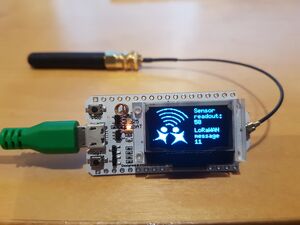
ESP32 mit LoRa Transceiver, WLAN - http://www.heltec.cn/project/wifi-lora-32/
- https://www.amazon.de/gp/product/B078M74NNN/
- https://www.amazon.de/gp/product/B076T28KWG/
- https://www.thethingsnetwork.org/forum/t/big-esp32-sx127x-topic-part-1/10247
- https://de.aliexpress.com/item/ESP32-0-96-Inch-Blue-OLED-Display-Bluetooth-WIFI-CP2102-LoRa-Kit-32-Module-Internet-Development/32840325780.html
- Sensor - wir wählen hier einen MQ-135, der eine recht allgemeine Aussage zur Luftqualität liefert (Benzol, Alkohol, Rauch, Ammoniak, Sulfide, Aromaten), ab 2 EUR beim Chinesen
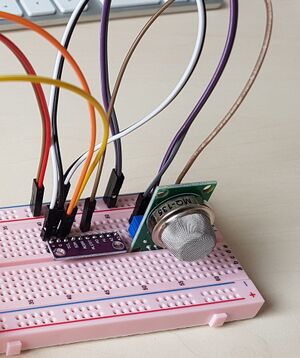
Luftgütesensor MQ-135 mit AD-Wandler ADS1115 auf Bredboard - ADS1115 AD-Wandler mit I2C (eigentlich könnte das Developer-Board AD-Wandeln auch direkt selbst, aber der oben beschriebene Typ verträgt nur 3,3V am Eingang und der MQ-135 liefert zwischen 0 und 5V am Ausgang, je nach Konzentration)
- Optional Breadboard und Kabel


Entwicklungsumgebung einrichten
- Arduino IDE. Das hier verwendete Entwicklungs-Board mit ESP32 lässt sich unter anderem mittels Arduino IDE programmieren
- Eventuell braucht das entsprechende Betriebssystem einen Treiber für den auf dem Entwicklungs-Board vorhandenen USB-Serial-Converter
- Arduino Core API für ESP32 installieren
- In der Arduino IDE Treiber fürs Board installieren
Software
- Hier fehlt noch viel - die Messwerte auf dem Bild stammen von einem MQ-135 an einem Raspberry PI
- C-Code (Arduino-Style) zum Auslesen des Sensors und Versenden des Ergebnisses per LoRaWAN
- InfluxDB und Grafana
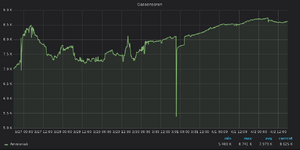
Verlauf der Sensor-Messwerte vom MQ-135
